Finding the perfect moisturizer is key to healthy, radiant skin. Understanding how to choose the right moisturizer for your skin type is crucial for achieving your skincare goals. The best choice depends heavily on your skin’s characteristics: oily skin benefits from lightweight gel moisturizers, while dry skin thrives with richer, cream-based formulas. For combination skin, a tailored approach might be necessary, utilizing a gel for the typically oilier T-zone and a cream for drier areas.
You may also refer to 皮膚幾天更新?揭秘28天皮膚細胞更新週期!
- Choosing Moisturizer: Skin Type Matters
- Find Your Perfect Match: Skin Type Guide
- Match Moisturizer to Your Skin Type
- Moisturizer Match: Your Skin Type
- How to choose the right moisturizer for your skin type Conclusion
- How to choose the right moisturizer for your skin type Quick FAQ
Choosing Moisturizer: Skin Type Matters
Selecting the right moisturizer is crucial for healthy, radiant skin, and understanding your skin type is the first step. Choosing the right moisturizer hinges entirely on this. Ignoring your skin type can lead to imbalances, exacerbating existing concerns. For example, using a heavy cream on oily skin can clog pores and lead to breakouts, while using a lightweight gel on dry skin might leave it feeling parched and irritated. This is why choosing a moisturizer based on your specific needs is paramount.
Let’s break it down:
- Oily skin: Individuals with oily skin often benefit from lightweight, gel-based moisturizers. These formulas provide hydration without adding extra weight or contributing to shine. Look for oil-free and non-comedogenic options to prevent clogged pores.
- Dry skin: If you have dry skin, you need a richer, more emollient moisturizer. Creams and lotions are ideal for providing intense hydration and restoring the skin’s protective barrier. Look for ingredients like ceramides and hyaluronic acid to lock in moisture.
- Combination skin: Combination skin requires a more nuanced approach. You might find that a gel moisturizer works well for your oily T-zone (forehead, nose, and chin), while a cream is better suited for drier areas like your cheeks. Consider using different products for different areas of your face.
Remember, choosing the right moisturizer is a journey, not a destination. Your skin’s needs can change based on factors like weather, hormones, and even your skincare routine. Don’t be afraid to experiment and adjust your moisturizer choice accordingly. Pay attention to how your skin feels – if it feels tight, dry, or excessively oily, it’s a sign you might need to switch things up.
Find Your Perfect Match: Skin Type Guide
Understanding your skin type is the cornerstone of choosing the right moisturizer for healthy, radiant skin. This guide helps you navigate the world of moisturizers and find your perfect match. Remember, selecting the appropriate moisturizer is crucial for maintaining your skin’s hydration and overall health. Ignoring your skin type can lead to issues like breakouts (if you use a heavy cream on oily skin) or dryness and irritation (if you use a lightweight gel on dry skin). Let’s delve into the specifics:
- Oily Skin: If your skin tends to be shiny, especially in your T-zone (forehead, nose, and chin), and you experience frequent breakouts, you likely have oily skin. A lightweight, oil-free gel moisturizer is your best bet. Look for formulations that are non-comedogenic (won’t clog pores) and offer hydration without adding excess oil.
- Dry Skin: Dry skin often feels tight, rough, or flaky. It may even be itchy. This skin type needs a richer, more emollient moisturizer, such as a cream or lotion. Look for ingredients like hyaluronic acid, ceramides, and shea butter, which will deeply hydrate and protect your skin barrier. Consider a thicker cream for particularly dry skin.
- Combination Skin: Many people have combination skin—oily in the T-zone but dry or normal in other areas. A dual approach is often the best strategy here. Use a lightweight gel moisturizer on your oily T-zone and a richer cream on drier areas like your cheeks. This targeted approach ensures proper hydration without overwhelming your oily areas.
- Sensitive Skin: Individuals with sensitive skin need to be extra cautious when choosing a moisturizer. Opt for hypoallergenic, fragrance-free, and non-comedogenic formulas. Always patch test a new product on a small area of skin before applying it to your entire face to check for any adverse reactions.
By carefully considering your unique skin type and needs, you can effectively select a moisturizer that enhances your skin’s health and beauty. Remember that consistency is key; applying your chosen moisturizer daily will yield the best results.
Match Moisturizer to Your Skin Type
Understanding your skin type is the cornerstone of choosing the right moisturizer. Matching moisturizer to your skin type ensures you’re addressing its specific needs, preventing imbalances, and promoting a healthy, radiant complexion. Ignoring this crucial step can lead to clogged pores, dryness, or even exacerbate existing skin conditions. Therefore, taking the time to accurately assess your skin type is a worthwhile investment in your skincare routine.
Let’s explore some common skin types and their ideal moisturizer pairings:
- Oily Skin: Individuals with oily skin often struggle with shine and breakouts. A lightweight gel moisturizer is your best bet. These formulations provide hydration without adding excess oil, helping to maintain a balanced complexion while preventing clogged pores. Look for ingredients like hyaluronic acid for hydration and avoid heavy creams or oils.
- Dry Skin: Dry skin often feels tight, rough, and may even flake. Rich, creamy moisturizers are essential for replenishing moisture and creating a protective barrier. Ingredients like ceramides, shea butter, and hyaluronic acid are excellent choices. Consider applying a thicker layer, especially at night, for maximum hydration.
- Combination Skin: This common skin type requires a more nuanced approach. Often, the T-zone (forehead, nose, and chin) is oilier, while cheeks may be drier. A dual approach is best: use a lightweight gel on the T-zone and a cream on the drier areas. This targeted approach allows you to address the needs of each zone effectively.
- Sensitive Skin: Individuals with sensitive skin need to prioritize gentle, fragrance-free, and hypoallergenic moisturizers. Opt for products with calming ingredients like chamomile or aloe vera. Always test a small amount on your inner wrist before applying it to your face to check for any irritation.
“`html
| Skin Type | Ideal Moisturizer | Key Ingredients/Considerations |
|---|---|---|
| Oily Skin | Lightweight gel moisturizer | Hyaluronic acid; avoid heavy creams or oils |
| Dry Skin | Rich, creamy moisturizer | Ceramides, shea butter, hyaluronic acid; thicker layer at night |
| Combination Skin | Dual approach: lightweight gel on T-zone, cream on drier areas | Targeted application to address specific needs |
| Sensitive Skin | Gentle, fragrance-free, hypoallergenic moisturizer | Calming ingredients like chamomile or aloe vera; patch test before use |
“`
Moisturizer Match: Your Skin Type
Understanding your skin type is the cornerstone of effective moisturizing. Choosing the right moisturizer isn’t about finding the most expensive product; it’s about finding the one that best suits your skin’s individual needs. Ignoring your skin type can lead to breakouts, dryness, or even irritation, undermining your efforts for healthy and radiant skin. This section will delve deeper into how to determine your skin type and choose a suitable moisturizer.
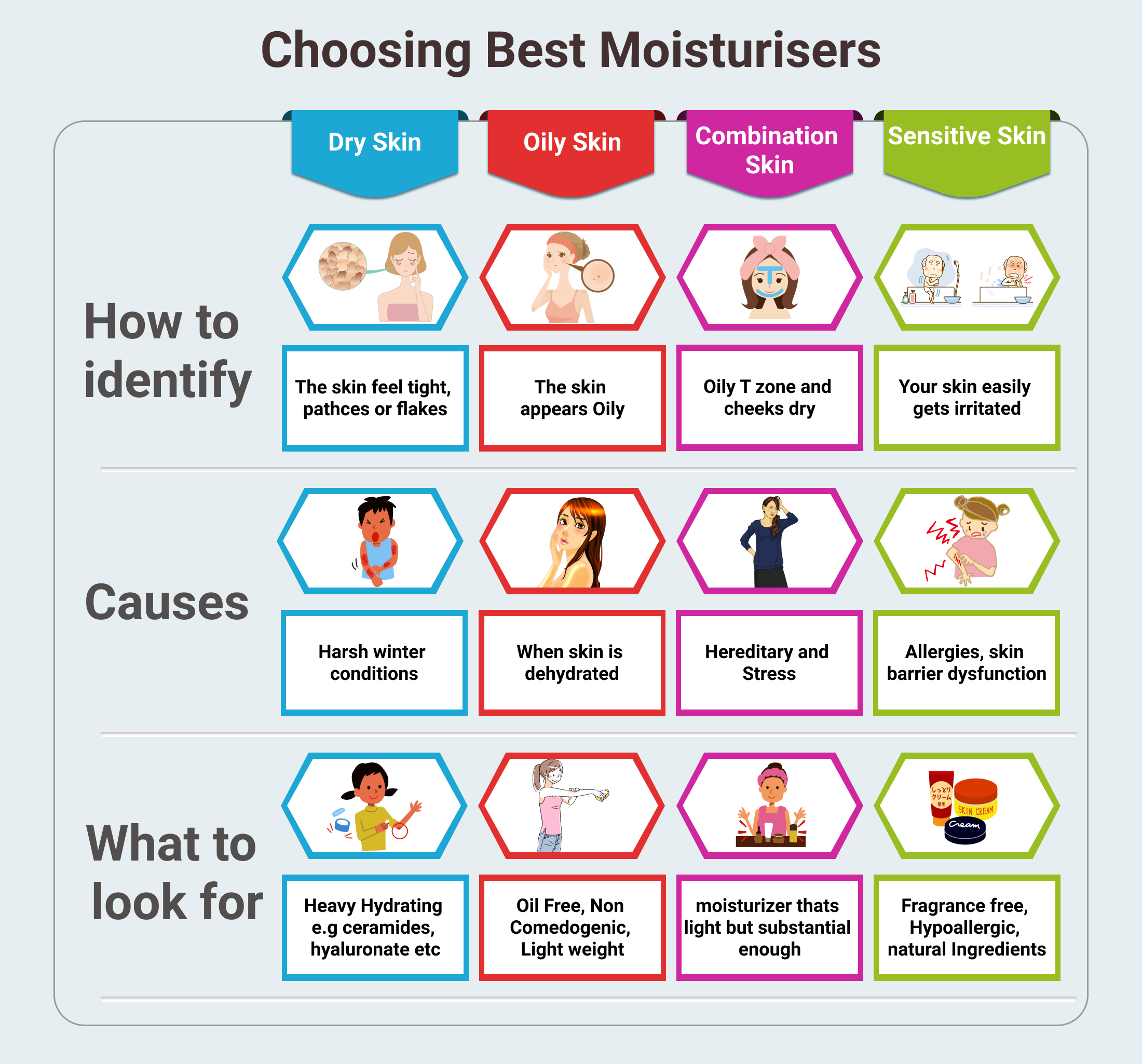
Let’s recap the basics: Oily skin often presents with a shiny appearance and a tendency towards breakouts. Dry skin feels tight, rough, and may even flake. Combination skin exhibits a mixture of both, typically with an oily T-zone (forehead, nose, and chin) and drier cheeks. Lastly, sensitive skin reacts easily to ingredients, often showing redness or irritation.
For those with oily skin, a lightweight, oil-free gel moisturizer is ideal. These formulas hydrate without adding excess oil, helping to maintain a healthy balance. Individuals with dry skin should look for richer, cream-based moisturizers that provide intensive hydration and help to create a protective barrier. Those with combination skin can benefit from a multi-pronged approach, perhaps using a gel moisturizer on their T-zone and a cream on drier areas. Remember, consistency is key—apply your chosen moisturizer twice a day, morning and night, for optimal results.
Finding the perfect moisturizer is a journey, not a destination. Experimentation is key to discovering what works best for your unique skin. Pay attention to how your skin reacts to different products and don’t be afraid to try samples or smaller sizes before committing to a full-sized purchase. Remember, a healthy, moisturized complexion reflects a healthy you!
How to choose the right moisturizer for your skin type Conclusion
Choosing the right moisturizer is a pivotal step in your skincare journey. We’ve explored the importance of understanding your skin type – whether it’s oily, dry, combination, or sensitive – in how to choose the right moisturizer for optimal results. Ignoring this crucial aspect can lead to skin imbalances, breakouts, dryness, or irritation. Remember, the goal isn’t simply to moisturize, but to moisturize effectively, addressing your skin’s unique needs.
This article provided a detailed guide on how to choose the right moisturizer based on your specific skin type. We highlighted the key differences between moisturizer formulations for oily, dry, combination, and sensitive skin. Lightweight gels are ideal for oily skin, while richer creams are best suited for dry skin. Combination skin may require a dual approach, using different moisturizers for different areas of the face. Sensitive skin demands gentle, hypoallergenic formulas.
Ultimately, finding the perfect moisturizer is a personal journey. It may involve some trial and error as you discover what works best for your skin. Pay close attention to your skin’s response to different products. Does it feel hydrated, balanced, and healthy? Or does it feel tight, oily, or irritated? Your skin will tell you what it needs. Don’t hesitate to experiment with different formulations and ingredients, and remember that consistency is key. By following the guidance provided in this article on how to choose the right moisturizer, you can confidently embark on your path to achieving healthy, radiant skin.
The information presented here is for general informational purposes only and does not constitute medical advice. Always consult with a dermatologist or other qualified healthcare professional if you have any questions or concerns about your skin or its treatment. They can provide personalized recommendations based on your individual needs and skin concerns.
How to choose the right moisturizer for your skin type Quick FAQ
What type of moisturizer is best for oily skin?
For oily skin, a lightweight, gel-based moisturizer is ideal. These formulas provide hydration without adding extra oil or contributing to shine. Look for oil-free and non-comedogenic options to prevent clogged pores. Avoid heavy creams that can exacerbate oiliness and breakouts.
What should I look for in a moisturizer if I have dry skin?
If you have dry skin, you need a richer, more emollient moisturizer. Creams and lotions are excellent choices, providing intense hydration and helping to restore your skin’s protective barrier. Look for ingredients like ceramides and hyaluronic acid, known for their moisture-locking properties. A thicker cream might be beneficial for particularly dry skin.
I have combination skin. What’s the best approach to moisturizing?
Combination skin requires a dual approach. Use a lightweight gel moisturizer on your oilier T-zone (forehead, nose, and chin) to control shine and prevent breakouts. Then, apply a richer cream to drier areas, such as your cheeks, to provide adequate hydration. This targeted approach addresses the specific needs of each area of your face.